
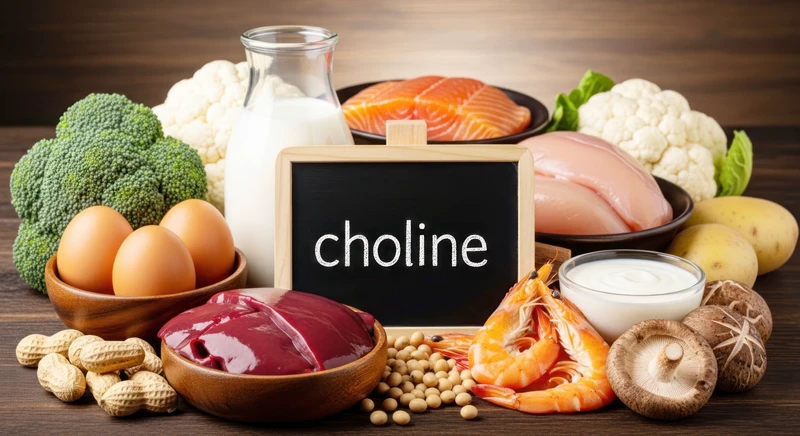
Choline may not be as well known as vitamin C, magnesium, or iron, but it plays an essential role in several important functions throughout the body. This nutrient supports brain and nervous system function, helps maintain healthy cell membranes, and contributes to normal liver function and metabolism.
Because the body can produce only a limited amount of choline on its own, getting enough from food is important.
Choline Supports Brain and Nerve Communication
One of choline's most important jobs is helping the body make acetylcholine, a neurotransmitter involved in memory, muscle control, and communication between nerve cells.
Your nervous system depends on neurotransmitters to send messages throughout the body, making choline an important nutrient for normal brain and nerve function.
It Helps Build Healthy Cell Membranes
Choline is also used to make phosphatidylcholine and other phospholipids, which are important structural components of cell membranes.
Healthy cell membranes help protect cells, regulate what enters and leaves them, and support communication between cells. Since every tissue and organ is made of cells, this gives choline an important role throughout the entire body.
Choline Plays a Role in Liver Health
The liver uses choline in processes involved in transporting and metabolizing fats. Adequate choline intake helps support normal liver function and the movement of fats away from the liver.
Choline also contributes to methylation, a group of chemical reactions involved in DNA function, metabolism, and other cellular processes.
Especially Important During Pregnancy
Choline needs increase during pregnancy because the nutrient contributes to normal fetal growth and development, particularly in the brain and nervous system.
While folate often receives much of the attention during pregnancy, choline is another nutrient worth considering as part of a well-balanced prenatal diet.
Foods That Provide Choline
Choline is found in both animal and plant foods. Good sources include:
- Eggs
- Beef
- Chicken
- Fish
- Milk and dairy products
- Soybeans
- Kidney beans
- Broccoli
- Brussels sprouts
Eggs are especially notable because the yolk contains a concentrated amount of choline.
An Overlooked Nutrient Worth Remembering
Choline may not appear in nutrition conversations as often as other vitamins and minerals, but its responsibilities are significant. From supporting nerve communication and cell membranes to contributing to liver function and healthy development, choline works behind the scenes throughout the body.
Including a variety of choline-rich foods in your diet can help provide this essential nutrient as part of a balanced approach to everyday wellness.