
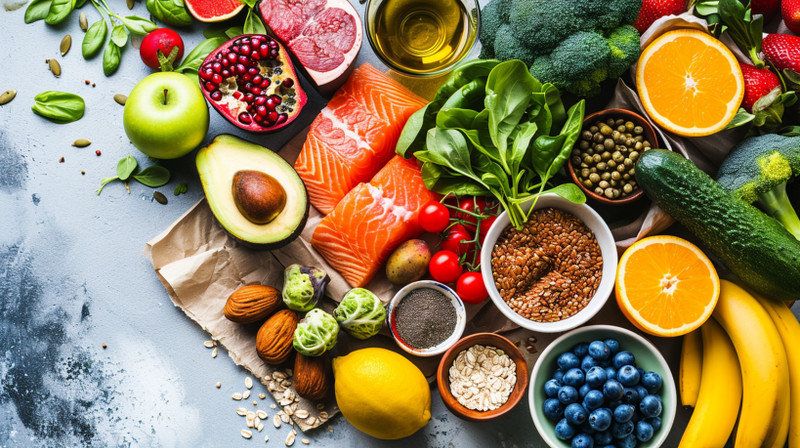
Eating healthy is not only about choosing nutritious foods. It is also about eating a variety of them.
Different foods provide different combinations of vitamins, minerals, fiber, antioxidants, amino acids, and healthy fats. When your diet includes a broader range of foods, you are more likely to give your body the diverse nutrients it needs to function well.
No Single Food Provides Everything
Even nutrient-dense foods have limitations. Spinach may provide folate, vitamin K, and magnesium, while salmon offers protein, omega-3 fatty acids, vitamin B12, and selenium.
Because foods have different nutritional strengths, relying on the same small group of foods every day may limit the range of nutrients you receive.
A varied diet helps fill those gaps naturally.
More Color Can Mean More Nutrients
Fruits and vegetables are especially important when it comes to variety. Different colors often represent different plant compounds and nutrient profiles.
For example:
- Orange and yellow produce may provide carotenoids
- Dark leafy greens can contribute folate, vitamin K, and magnesium
- Berries contain vitamin C and a variety of antioxidant compounds
- Tomatoes provide lycopene and other nutrients
- Beans and lentils contribute fiber, iron, folate, and plant-based protein
Instead of focusing on one so-called superfood, try eating several different colors throughout the week.
Variety Supports Your Gut Too
Eating a wider range of plant foods can also provide different types of fiber and other compounds that support the microorganisms living in your digestive tract.
Different gut bacteria use different food components, so dietary variety can help support a more diverse nutritional environment in the digestive system.
Whole grains, fruits, vegetables, beans, nuts, and seeds are all useful additions.
Rotate Your Protein Sources
Variety matters with protein too.
Fish, eggs, poultry, dairy products, beans, lentils, soy foods, nuts, and seeds all provide protein, but they also bring different vitamins, minerals, and fats to your diet.
Rotating protein sources can help broaden your intake of nutrients such as iron, zinc, calcium, choline, selenium, vitamin B12, magnesium, and omega-3 fatty acids.
Make Variety Simple
You do not need to completely redesign your meals. Small changes can make a difference.
Try choosing a different vegetable with dinner, rotating your favorite fruits, experimenting with new whole grains, or swapping one protein source for another during the week.
Over time, these small changes can create a much more nutritionally diverse diet.
A Broader Diet Builds a Stronger Foundation
Good nutrition is not about finding one perfect food. It is about giving your body a wide range of nutritional building blocks.
By eating different fruits, vegetables, proteins, whole grains, nuts, seeds, and other nutrient-dense foods, you can create a more balanced diet and support whole-body wellness through greater nutritional variety.